


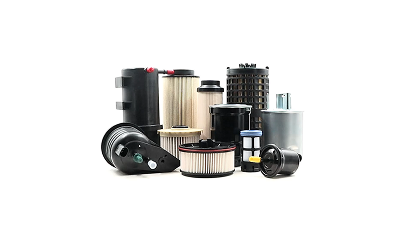
 Fuel Filters
 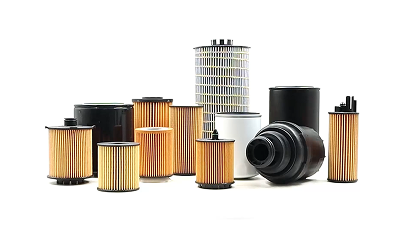 Oil Filters
 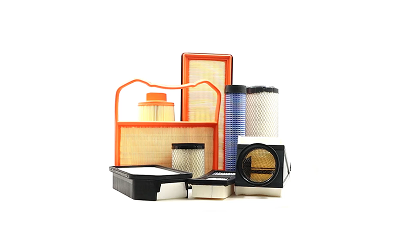 Air Filters
 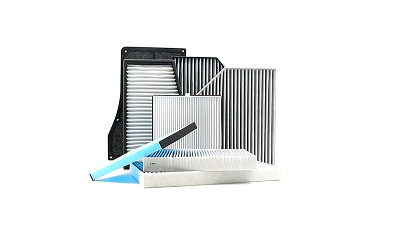 Cabin Filters
  Other Filters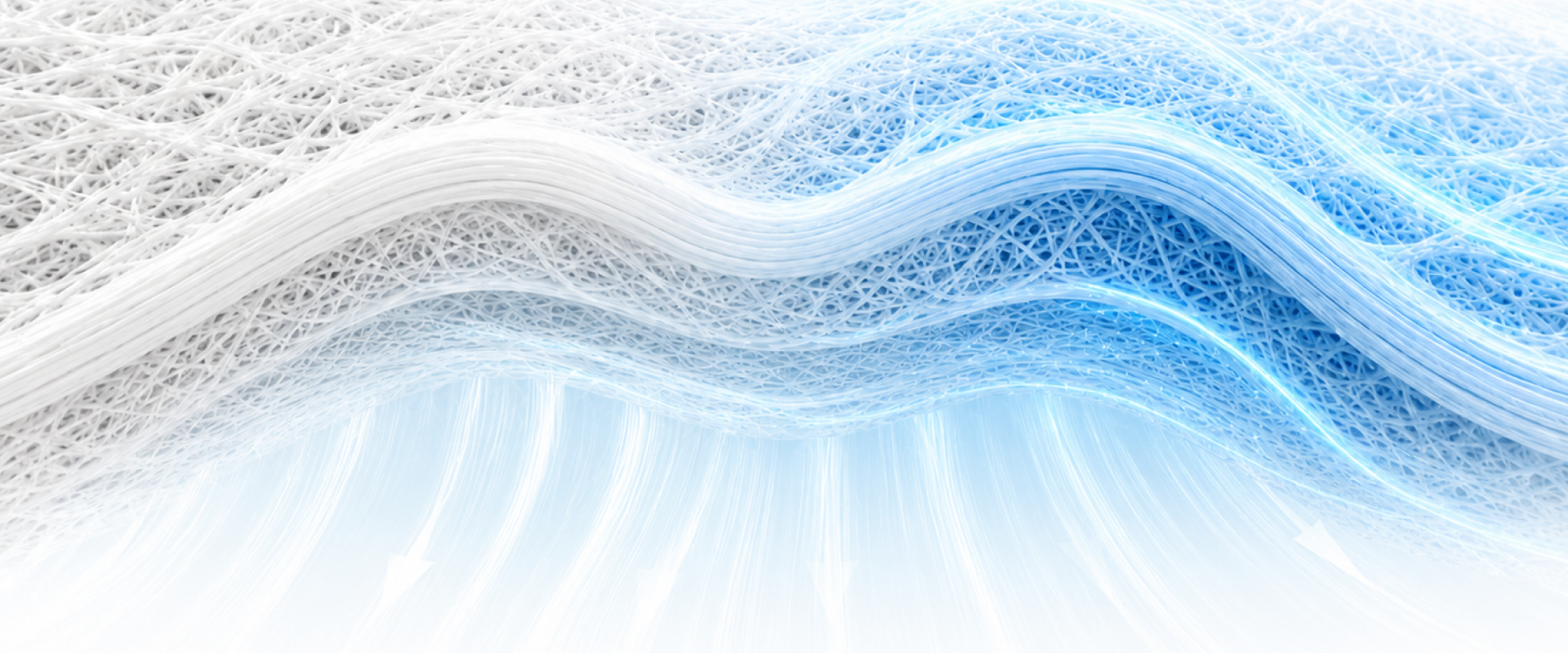
 home
home
what is in-ex?
IN-EX is a clean sono-chemical impregnation platform that upgrades standard filter media into functional media.
Using acoustic cavitation in a water-based process, functional particles are embedded directly into the fiber matrix — without binders, glues, or pore-blocking surface coatings.
The result is a versatile technology that gives filter media new properties while preserving permeability, airflow, and liquid-flow performance. It enables advanced functional filters without the energy penalties and environmental compromises common in traditional treatment methods.
The industry challenge
-
 Coatings and binders can block pores
 -
 Higher differential pressure means higher energy demand
 -
 Surface treatments can degrade, wash off, or flake
 -
 PFAS, recycling, and chemistry restrictions are growing
Functional Filtration
A sono-chemical impregnation platform for next-generation filter media.
-
 PFAS & VOC-Free Process
 -
 Binder-Free
 -
 Low ΔP Impact
The in-ex Solution
Sono-chemical Impregnation
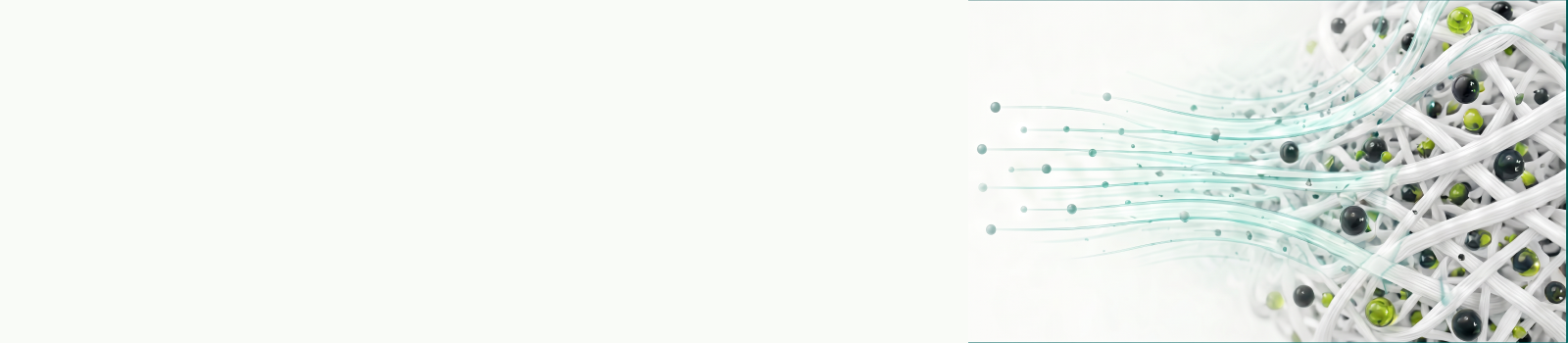
Particles are driven onto and into the fiber surface by acoustic cavitation, without a binder layer.
-
 Open
Open
Porosity -
 Unrestricted
flow -
 Lower ΔP
Lower energy
-
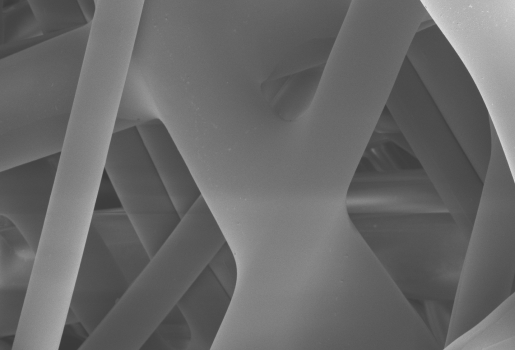 Untreated Fiber Close-up
 -
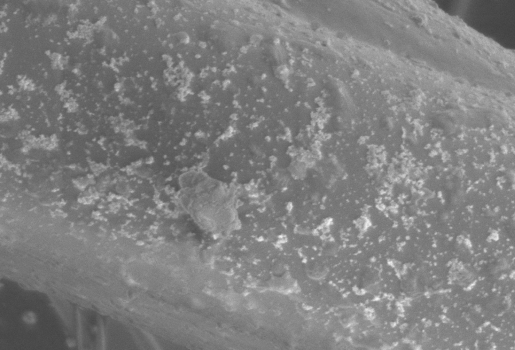 IN-EX Treated Fiber Close-up
 -
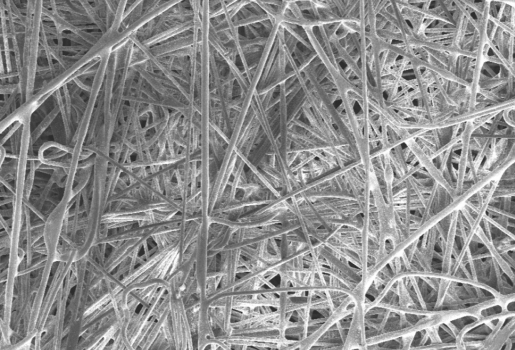 IN-EX Treated Media
How in-ex works
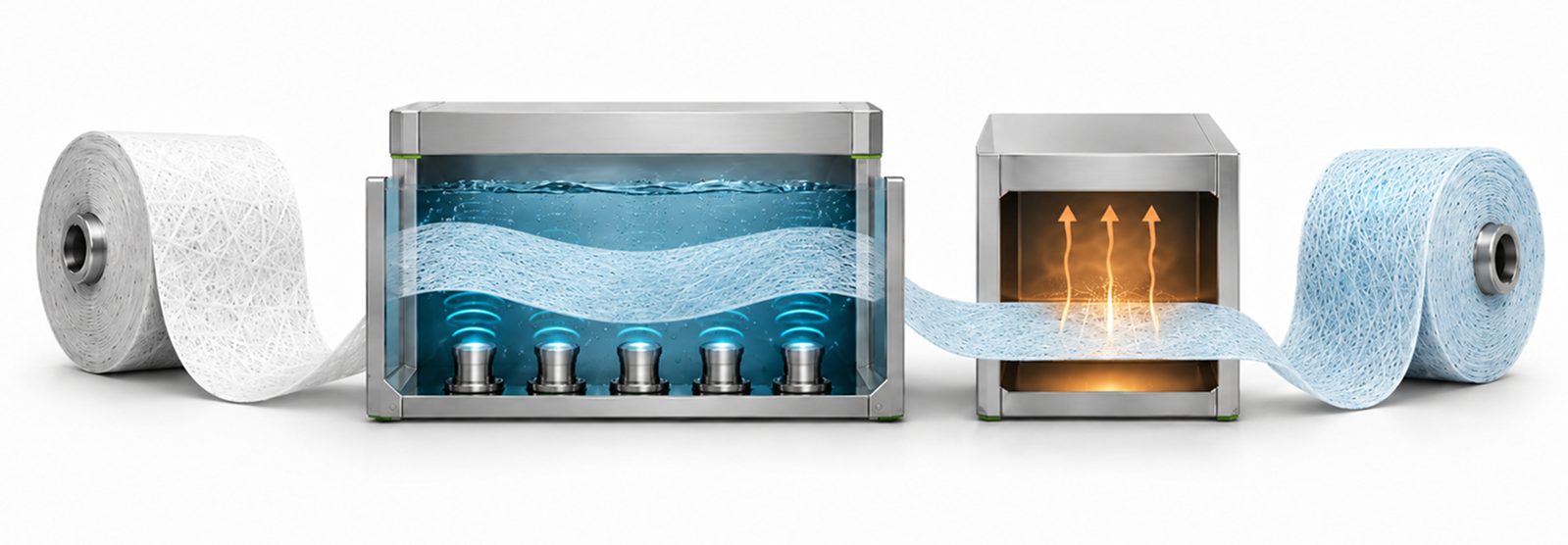
A water-based ultrasonic process that embeds functional particles into the fiber matrix.
-
 1Selected functional particles are dispersed in water
 -
 2Ultrasonic cavitation creates high-energy micro-jets
 -
 3Micro-jets drive the particles into the fiber matrix
 -
 4The media is functionalized while its fundamental properties (flow and porosity) are preserved
Key process benefits
-
 Water
Water
based -
 Binder
free -
 Strong
particle retention -
 Low ΔP
impact -
 Continuous
roll-to-roll ready

The in-ex DIFFERENCE
-
COMPARISON AREACONVENTIONAL METHODSin-ex platform
-
 How function
is addedSurface coating / glue / binder Particles embedded in
fiber matrix -
 Pore structureCan block pores
 Open porosity preserved
 -
 Differential pressureHigher ΔP, higher energy demand
 Low ΔP impact
 -
 DurabilityMay degrade, wash off, or flake
 Strong particle retention
 -
 Environmental profileMore chemistry burden
 PFAS & VOC-Free, water-based process
 -
 Design flexibilityLimited treatment options
 One platform, many functional particle systems

is a platform —
not a single feature.
not a single feature.
Real functional particles
Examples of particle systems that can add extra performance to filter media.
-
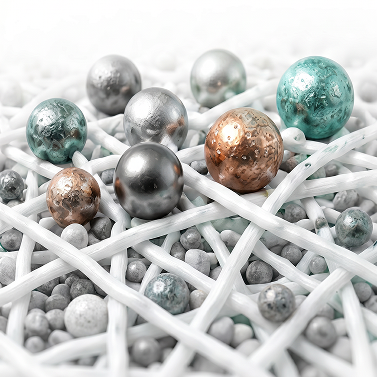
 Silver / copper / zinc compoundsAntimicrobial activity and biofilm control
 -
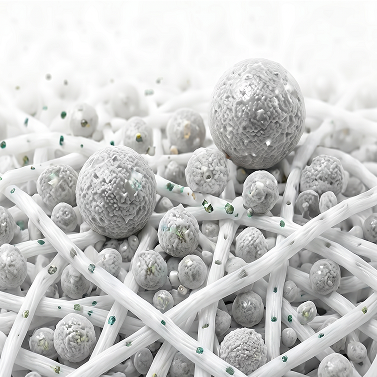
 Titanium dioxide
(TiO₂)Photocatalytic support and odor reduction under suitable light conditions -
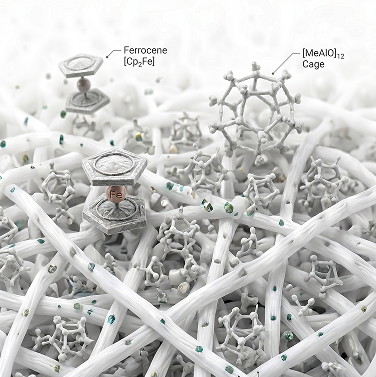
 Aluminum and Iron Metallo-Organic CompoundsEnhanced pathogen attraction while maintaining low ΔP impact
 -
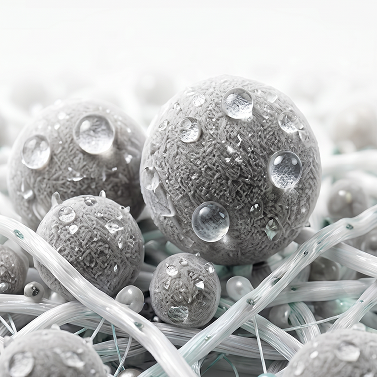
 Hydrophobic mineral particlesWater repellency and liquid-separation support

The selected chemistry depends on the media, application, regulations, and target performance.
Use cases across filtration
One platform for air and liquid media

Air filtration
-
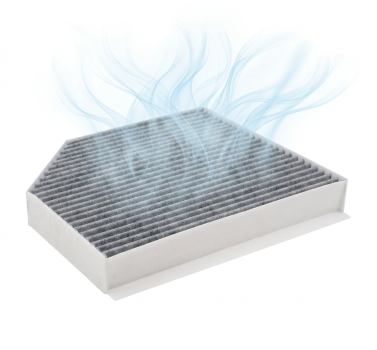
 Cabin
Cabin
air filtersAntimicrobial functionality and odor control -

 HVAC / IAQ
filtersCleaner indoor air and reduced microbial buildup on media -
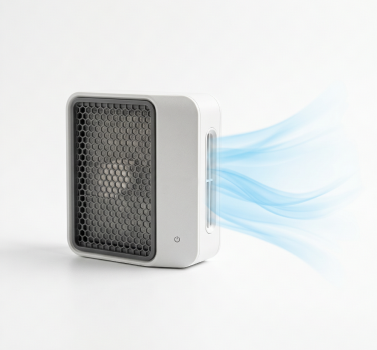
 Portable AC &
appliance filtersCompact hygienic media solutions -

 Industrial
dust collectionAnti-static and specialty functional media

Liquid filtration
-
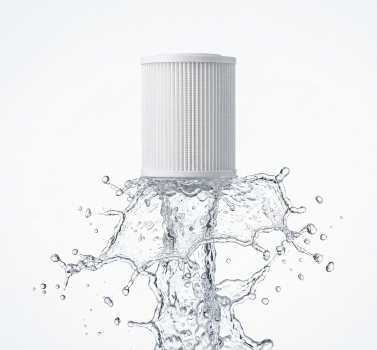
 Fuel & hydraulic
filtersWater-separation support and functional media enhancement -
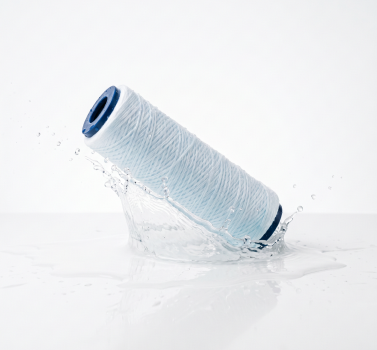
 Water / process
filtrationAnti-fouling or active functional surfaces
Tailored particle-media combinations for the need of each application
Current in-ex product examples
Existing applications based on the technology
-
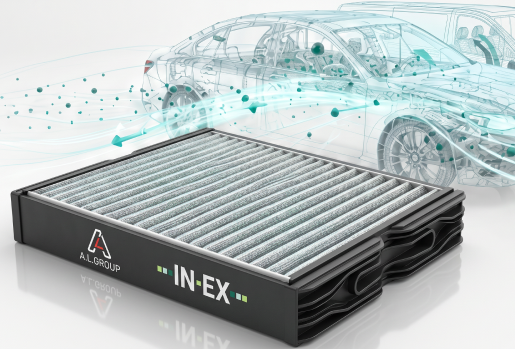
 Antiviral Cabin Filters
- For passenger cars and commercial vehicles
- Functional media with low ΔP impact
-
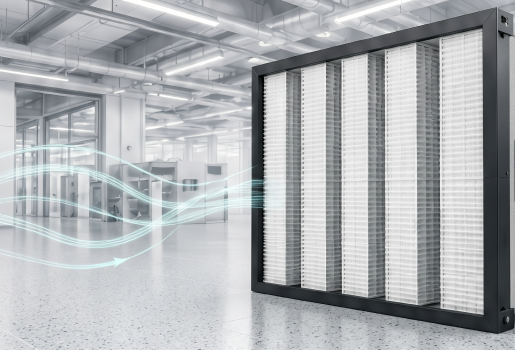
 HVAC Filters
- For commercial and institutional air systems
- Cleaner indoor air applications
-
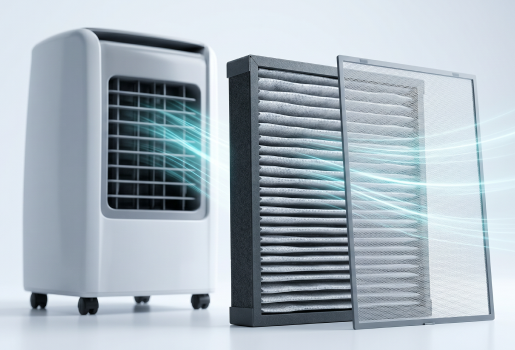
 PORTABLE A/C & PURIFIER FILTERS
- Treated media for portable cooling units
- Hygienic filtration performance

Further tailored product concepts can be developed for additional filter types and media formats.
FAQ
-
Is IN-EX a coating?

 No. IN-EX is not a conventional surface coating. It is an impregnation process that embeds functional particles into the filter media structure, helping maintain airflow while adding functional performance to the media.
 -
What is the main advantage of IN-EX compared with traditional treated media?
Traditional treatments often sit on the surface of the media and may affect airflow or pressure drop. IN-EX is designed to integrate the active particles into the fiber matrix, creating a more stable and efficient functional media structure.
-
Does IN-EX change the filter’s airflow performance?
IN-EX is designed to preserve the original airflow characteristics of the media as much as possible. The final performance depends on the media type, filter construction and treatment level, and is validated through testing.
-
Can IN-EX be applied to different types of media?
Yes. IN-EX can be adapted to different filtration media, depending on the application, target performance and technical requirements.
-
Is IN-EX suitable only for automotive cabin filters?
No. Automotive cabin filtration is one important application, but IN-EX can also be relevant for HVAC, indoor air quality, portable air systems and selected industrial filtration applications.
-
What kind of functional performance can IN-EX add?
Depending on the active material used, IN-EX can support different functional properties, including antimicrobial protection, odor reduction, enhanced air quality performance or other application-specific benefits.
-
Does IN-EX release particles into the air?
IN-EX is designed to embed the functional particles into the media rather than leave them loosely on the surface. The goal is to create a stable treated media that performs without releasing active particles into the airflow.
-
Is IN-EX safe for use in air filtration?
IN-EX is developed using controlled materials and processes. Final safety and compliance depend on the specific application, active material, market and regulatory requirements.
-
Does IN-EX use solvents or PFAS?
IN-EX is a water-based process and is developed without PFAS-based coatings, binders or glues.
-
Can IN-EX be used with existing filter designs?
In many cases, yes. IN-EX can be applied to selected media before filter production, allowing functional media to be integrated into existing or newly developed filter designs.
-
Is IN-EX available for private-label products?
Yes. IN-EX can be integrated into private-label filtration programs, allowing A.L. GROUP partners to offer advanced functional filters under their own brand.
-
How is IN-EX validated?
Validation depends on the target application and may include airflow, pressure drop, filtration efficiency, microbial performance, durability and material stability testing.
-
Can IN-EX help differentiate a filter range?
Yes. IN-EX allows partners to upgrade standard filtration products into value-added solutions, helping create stronger product differentiation in competitive markets.
-
Is IN-EX a replacement for HEPA filtration?
No. IN-EX is not simply a HEPA replacement. It is a functional media treatment platform that can be combined with different filtration grades depending on the required performance.
-
Can A.L. GROUP develop a specific IN-EX solution for our market?
Yes. A.L. GROUP can work with partners to evaluate the application, media type, performance target and regulatory needs in order to develop a suitable IN-EX-based solution.

Contact us